

 See My Latest Article on HelloNation
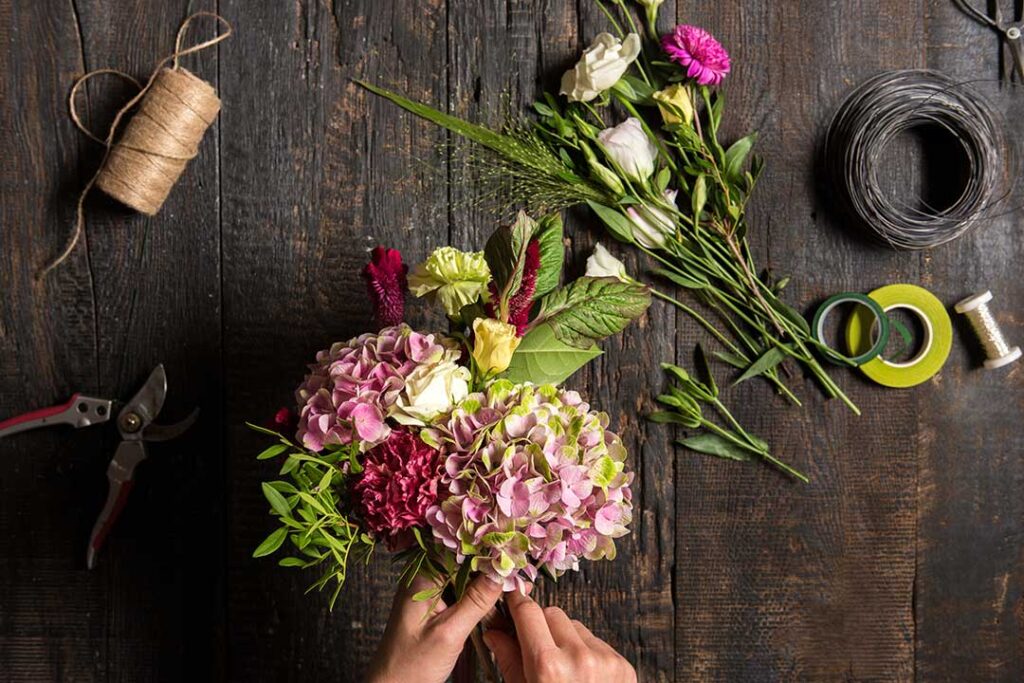
What makes a home flower arrangement look balanced?
A beautiful arrangement usually depends more on proportion, freshness, and spacing than on expensive flowers. Begin with a clean vase, choose a simple color direction, and build the design from greenery to focal flowers and smaller accents.
Before cutting stems, consider where the arrangement will sit. A low, wide design works well on a dining table because it does not block conversation. A taller arrangement can suit an entry table or corner, but its height should remain proportional to the container and surrounding space.
A useful general guideline is to keep the total arrangement about one and a half times the height or width of the vase. This is not a strict rule, but it helps prevent flowers from looking crowded or visually unsteady.
How should flowers be prepared before arranging?
Proper preparation begins with clean tools and fresh water. Remove leaves that would sit below the waterline, because submerged foliage decays quickly and can encourage bacterial growth.
Cut each stem at an angle with a sharp knife or floral snips. An angled cut increases the surface area available for water uptake and prevents the stem from resting flat against the bottom of the vase. Avoid crushing or tearing stems with dull scissors.
Flowers purchased from a store, greenhouse, or garden often benefit from conditioning before the final arrangement. Place the freshly cut stems in a clean container of lukewarm water and allow them to rest in a cool area for several hours. This gives them time to rehydrate and can help wilted stems recover.
For flowers cut from a home garden, harvest in the cool part of the morning or evening. Choose stems with firm foliage and blooms that are just beginning to open. Fully open flowers may provide immediate color but often have a shorter vase life.
Which flowers work well together?
A successful arrangement often includes three visual roles:
- Focal flowers: Larger or more distinctive blooms that attract attention.
- Supporting flowers: Medium-sized flowers that add color and volume.
- Line flowers or greenery: Tall stems, branches, grasses, or foliage that create height and movement.
The flowers do not need to be identical in shape. In fact, combining rounded blooms with slender spikes or airy filler can make the design feel more natural. Similar colors help unify different flower shapes, while contrasting colors create a stronger, more energetic appearance.
For a calm arrangement, use related shades such as cream, pale yellow, soft pink, and green. For a more dramatic design, pair two contrasting colors and let greenery provide the visual transition.
Seasonal materials can also make an arrangement feel appropriate to the time of year. In spring, delicate branches and bulb flowers create a lighter look. Summer arrangements may include garden flowers and fragrant foliage. Autumn designs can incorporate seed heads, textured leaves, and warm colors. Winter arrangements often benefit from evergreen branches, berries, and sturdy stems.
How can someone arrange flowers without floral foam?
Floral foam is not required for most home arrangements. A vase with a narrow opening can hold stems in place naturally. For a wider container, use one of these simple methods:
- Create a loose grid across the vase opening with waterproof tape.
- Place a smaller jar inside a larger decorative container.
- Use a flower frog or pin holder designed for arranging stems.
- Tie a small bundle of stems loosely with natural twine before placing it in the vase.
- Arrange heavier greenery around the edge to support more delicate flowers.
A grid of tape works best when the vase rim is dry and the tape is firmly attached. Do not rely on regular paper tape, which may loosen when exposed to water.
Begin with the outer greenery, placing stems at different angles to establish the width. Add the largest flowers next, spacing them so the eye moves around the arrangement rather than stopping at one dense cluster. Finish with smaller blooms and airy accents.
How much water should be used?
Fill the vase enough to cover the lower portions of the stems, but avoid placing leaves underwater. Some flowers prefer deeper water, while others with soft or hollow stems are less stable in a very full vase.
Change the water every one to three days, depending on how quickly it becomes cloudy. Each time, rinse the vase, trim a small amount from the stems, and remove any decaying foliage or petals. Fresh water is usually more valuable than adding extra flower food to dirty water.
Commercial flower food can help some cut flowers, but it is not a substitute for sanitation. Clean water, a clean container, and regular trimming usually have the greatest effect on longevity.
Where should an arrangement be placed?
Flowers last longer in a cool location away from direct sunlight, heating vents, fireplaces, and strong drafts. In homes that experience cold winters, avoid placing arrangements directly beside a radiator or heat pump vent. Rapid temperature changes can cause flowers to wilt quickly.
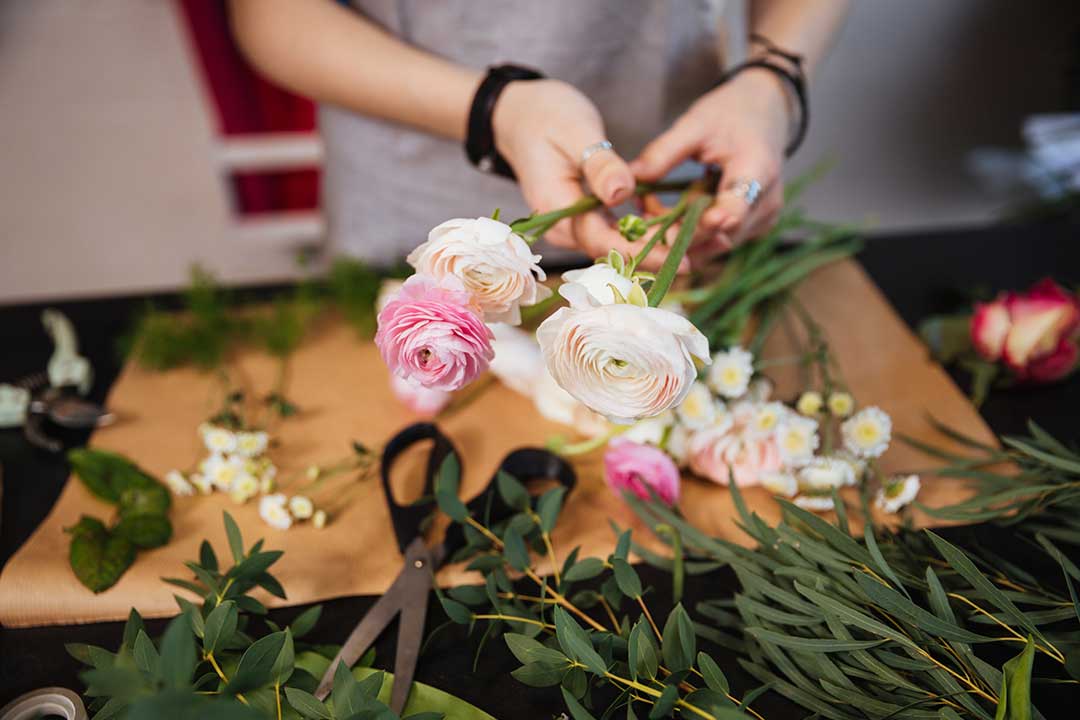
Keep cut flowers away from ripening fruit. Fruits release ethylene gas, which can speed up aging in many flowers. A sunny kitchen counter may be convenient, but a nearby fruit bowl can shorten vase life.
A stable surface is also important. Tall arrangements should be placed where they are unlikely to be bumped by pets, children, coats, or household traffic. In smaller rooms or apartments, a compact arrangement in a low vessel can provide color without taking up much space.
What are common mistakes in flower arranging?
Several problems can make an arrangement look tired or unbalanced:
- Using a vase that is too large for the number of stems.
- Placing every flower at the same height.
- Packing stems so tightly that individual blooms disappear.
- Leaving foliage below the waterline.
- Combining flowers with very different water or temperature needs.
- Ignoring the arrangement from the side and back.
- Failing to remove fading flowers as they age.
An arrangement should be viewed from the direction in which it will normally be seen. A centerpiece needs a balanced appearance from several angles, while a wall-facing arrangement can be fuller in front and flatter in back.
Do not discard the entire arrangement when a few flowers fade. Remove the aging stems, recut the remaining flowers, and transfer them to a smaller vase. A reduced arrangement often looks intentional and can last several additional days.
How can seasonal conditions affect flowers in Concord, NH?
Seasonal temperature changes influence both locally grown flowers and cut arrangements kept indoors. During warm, humid periods, water can become cloudy more quickly, so frequent cleaning is useful. During the heating season, dry indoor air may cause delicate petals and foliage to lose moisture faster.
Flowers gathered from outdoor spaces should be brought inside gradually if temperatures are very different. Inspect stems and leaves for insects before placing them near houseplants. Garden branches may also benefit from a few hours of conditioning in water before they are combined with purchased flowers.
For winter arrangements, avoid collecting branches from areas where cutting is restricted or where plant health could be damaged. Use prunings from appropriate home landscaping or materials that have already been removed during routine maintenance.
How can beginners practice without wasting flowers?
Start with five to ten stems and a small vase. Practice making three arrangements from the same materials: one rounded design, one asymmetrical design, and one low centerpiece. Photograph each from several angles to compare proportion and spacing.
Learning to notice stem direction is more useful than trying to copy a particular shape. Bendable stems can create movement, while straight stems provide structure. Remove any flower that seems overcrowded, then check whether the arrangement looks better with more open space.
The most reliable home arrangements are built gradually. Clean water, careful preparation, suitable placement, and thoughtful spacing will usually matter more than complex techniques.